domingo, 14 de noviembre de 2021

The Campanton Sephardi “Iyyun” Approach to Yeshiva Learning*


Yitzchak Kerem, The Hebrew University, Jerusalem

In the context of Jewish yeshiva learning in Christian Spain during the 13th to 15th centuries, Rabbi Isaac Campanton (1360-1463) in Zamora devised a school of yeshiva learning which concentrated on the “Pshat”, the simple meaning, which also was quite unique and has been the base for Sephardi learning.
 

The approach focuses also on precisely interpreting the word to its fullest linguistic and historical context. Juxtaposed to the Ashkenazi “pilpul” argumentative and riddled style, the “Iyyun” approach promotes further innovative interpretation, expertise, and unraveling and simplifying perplexity, but it is reflective of a Sephardic humanistic approach which almost always looks at the local regional influences including Aristotelian medieval Spanish thought and Christian ecclesiastical doctrine not as a polemical obstacle, but as tools in interpreting the text. 

The system adopted Aristotelian logic for interpreting Talmudic text. Opposed to the Ashkenazi yeshiva tradition, the Sephardi approach does not confine itself to Talmudic interpretation, but also to Biblical study, Kabbala, and “hiddushim”; new incites in Jewish religious thought. As Boyarin has illustrated, the Campanton system has a very wide base of analysis based on Rashi’s commentaries and language. According to Boyarin, Campanton’s method spread to Safed and Jerusalem, Constantinople to Salonika, and Cairo to Fez.  Its luminaries included the Rabbis Birav, Caro, Levi Ben Haviv, and David ben Zimra; however it has not been recognized adequately.

Campanton was called the Gaon (luminary) from Castille, who trained his students to research the principles and essence of the Talmud, put in order the Tanaim and Amoraim according to their time and evolution of their absorption according to their rabbis (teachers).

The Campanton school of “Iyyun” was the standard in the Sephardic diaspora after the 1492 Spanish expulsion, and continued for the next 250 years from Salonika, Istanbul, to Safed, Egypt, and North Africa through front-row disciples like the Aboavs, David Ben-Zimra, the Ibn Havivs, Joseph Taitazak, Yaakov Berav, Abraham Saba, and the Valencis. The system waned in the Ottoman Empire and North Africa with modernization and alternative trends in thought, but has been revived in Tunisia and later Eretz-Israel/Israel by Rabbis Matzliah Mazuz of Djerba (murdered in Tunis in 1971) and his son Meir Mazuz, who established the prestigious Kise Rachamim Yeshiva in B’nai Brak, Israel.  

Mazuz laid out 5 principles of the Iyyun Tunisai (Tunisian Analysis) which is an outgrowth of the Campanton Sephardic Iyyun (Analysis) initially exemplified by the latter in his work Darkhei haTalmud (The Ways of the Talmud). 

According to Mazuz, he calls his method primarily an approach of iyyun ha-yashar, the straight analysis, a term that serves as a polemical tool against other methods that muddle the text instead of elucidating it in a step-by-step process. Mazuz contends that over the centuries a methodology emerged with the necessary exactness to determine the law. Mazuz rejects inexactness in law just like Campanton used a methodology with Aristotelian assumptions, which analyzed any idea or interpretation as provable or disprovable on rational analysis.  

Mazuz elaborated his concise, but thorough and straightforward method based on rabbinic tradition:
The foundation of the foundations of Iyyun is that there is nothing missing [from] or added onto the language of the Gemara, Rashi, and Tosafot. There is nothing missing – because the text has not come to shut out [information] but to explain and take heed to limit [le-tsamtsem] his language and to derive [concepts from] it in a way that there will not be an extra word., for [under consideration] are missing from the Talmudic discussion [Aramic sugya] and its commentaries, for they [the rabbis] have not come to test us with riddles … And there is nothing added – because our rabbis have always tried to write with brevity and exactness, [with] the small carrying the abundant [i.e. with a small number of words carrying great depth].

Campanton’s method below is echoed in the above passage of Mazuz:

And always attempt to impute necessity for all of the words of a commentator or an author in all of his language: why did he say it and what did he intend with that language, whether to explain [an issue] or to derive [a concept] from another explanation or to resolve a difficulty or a problem. And take heed to limit [le-tsamtsem] his language and to derive [concepts from] it in a way that there will not be an extra word, for if it were possible to express his intent, for example, in three words, why did he express [himself using] four [words]? And so you should do with the language of the Mishna and Gemara, that is, you should check their language so that there not be an extra word, and when it appears to you to be extra go back and analyze well, for they did not expand their words unnecessarily, for it is not a small matter, and the splendor of sages is to minimize words so that many concepts are included in small [numbers of] words, and to make their words few in quantity but great [lit. “many”] in quality, and there should not be within their words an extra word, even [if it consists] of one letter, as they [the Sages] have said ([B.T. Hullin 63b). “A person should always teach his students in a concise way,” as you see in our Holy Torah, which was given from the Mouth of the Mighty One, which speaks with a concise language but includes many things …


The second characteristic of Mazuz’s Iyyun Tunisai is syntax; the importance of understanding each word and its implications, and proper stopping points of basic expressions. A student needs to know the meanings of basic expressions, which can change depending on context. Syntax is important and one needs to understand where the sentence ends or where the idea ends if the commentator did not properly end the sentence. The third facet of Mazuz’s iyyun is to ask, in every place, what was Rashi, Tosafot, or Maharsha bothered by, and from which error they were protected from in that word and sentence.

The student should ask why a classical commentary would add an extra word, or would use a seemingly odd phrase; necessities for understanding the text under discussion. The classical Sephardic perspective, also advanced by Campanton, is analyzing also “me’ayyenim k’sevara mi-bachutz”; the logical construction whose origin is outside the text or which has been added in subsequent generations.   

Mazuz’s fourth element of the Iyyun Tunisai reates to the logical flow in the text of the Tosafot, who were known for posing many questions and answers in a row. Mazuz suggested stopping after each question-and-answer pair to analyze how each question was answered and how the next question relates to the previous question-and-answer. In this manner, the student can identify in what way the main issue discussed is resolved. The resolution is known as “the center of the resolution”, or merkaz ha-teruts.

The assumption that every element in a rabbinic text relates to the previous one or the next one is elaborated on specifically by Campanton at the beginning of Chapter Ten in his Darkchei Ha-Talmud:
Always, for every statement and for every concept that is situated next to another, whether in Talmud or in Scripture (ba-Katuv), carefully observe the relationship and connection between those concepts situated next to each other, including what order the speaker is leafing (molikh) with his words.

The fifth element of Iyyun Tunisei according to Mazuz is “the importance of writing and revising one’s studies”. The student should test to see whether he has understood it properly. If the student’s own words seem to match the commentator’s, but are simply more expansive, the student has understood; if not, the student should review the commentary and revise his statement. Aside from the clarity of understanding the student gains, frequent writing and revision allows the student to express his ideas clearly’. The rabbis of Djerba used this pedagogical method; training their students to write their own novellae in a clear and organized manner.  

*Presented at the 5th International Congress on the Jewish Sephardic Legacy of City of Zamora, Spain, July 3rd, 2017. 


domingo, 7 de noviembre de 2021

Reconnecting Hispanic and Latinos with their Jewish Ancestry


AIPAC, Monday, March 25, 2019
Video of this panel is available at Ashely Perry's and Genie Milgrom's Facebook pages. 

Panelists: Dr. Ofir Haivry, Herzl Institute (Israel), Genie Milgrom, Genealogist & Author (U.S.A), Ashely Perry, President of Reconnectar (Israel), and Michael Freud (moderator), President of Shavei Israel (Israel)
1- Numbers of Hispanic and/or Latinos with Jewish ancestry

Ashley: Based on academic research from more than 60 experts 1 in 4 people in Latin America have Jewish ancestry to which it should be added Latinos in the U.S., and people from Spain & Portugal, which studies state that 1 in 3, 1 in 5 also have Jewish ancestry. That puts the number at 100 million. Not all of these people want to return to Judaism though, based in a survey Reconnectar did, 14% of them would like to identify as Jews with the Jewish people, 30% are aware of their Jewish ancestry and they want to know more. Other numbers from the survey are: 51% want to know more about the state of Israel, 50% want to visit Israel, 46% would like to advocate for Israel. These are game changing numbers.

Dr. Haivry: There are many levels to this numbers. Most are interested in learning about Israel, Judaism and even Hebrew language. There are also a significant number that organize in groups in different places (e.i. Brasil), they are very proud of their Jewish ancestry, and in many cases advocate for Israel more than in the (traditional) Jewish community where people might be afraid of over exposure, and to prevent attacks to their synagogues. There are also organized Jewish communities that want to become officially renown. Some want to convert, some wish to be recognized, and a small % want to come to Israel.
We should clarify that the numbers vary depending of the areas, for example, Chile has smaller numbers than Brazil, Mexico, and Colombia. I would say that it is a grassroots movement at this time, and there is not a central command or israeli effort. 99% of what's going on is from people who want to reconnect. We need to find ways to approach this grassroot movement.

Genie: The ultimate question here is how all of this reconnection relates to Israel. I come from a catholic family from Cuba, however, I always felt Jewish, and converted to Judaism many years ago. After my conversation I had this need to go further in my feelings, which I did when my grandmother died leaving me some jewelry of Jewish motifs that she had inherited from her mother and grandmother. Because of this, I did my genealogy, and was able to track my Jewish maternal linage back to 1405 Pre Inquisition Spain. This is also the story of many people in this grassroot movement that Dr. Haivry mentioned. Not everyone though has the tenacity and resources to find the documents in the archives, and officially return as I did. 

The difference with families like mine and other diaspora Jews is that even when this documentation affects the entire family so far it has been only me that is interested. This is a one on one journey which makes the situation different from, for example, Russians Jews emigrating to Israel by the thousands. We - in the Hispanic and Latino world- return one by one. One here, and another there, it is when adding all this up that it sums up to millions, but it is not that we all return together. 

When someone says to you "I feel Jewish" it is not because they want to please you, it is a serious statement that needs to be taken into consideration. It is a phenomenon in the last 20 or 30 years. Before converting, Israel was for me, part of a sacred history book, but afterwards, Israel become something larger than life.

Michael: The scope of the phenomenon is vast, we see it from Barcelona to Brazil, from Peru to Palma de Mallorca, also we see it across socioecomic status, from peasants in northen Brazil to professors in northen Portugal. When people hear the numbers of those with Jewish ancestry it can be intimidating, and frightening at times. What we see in the field is the reluctance of many organized Jewish communities to welcome such people into their nest, and that is the next question

2- a) Why does this concern about the numbers?, b) How do you think Jewish communities should advocate about this?

Dr. Haivry: The actual number of people, who want to convert is small, in part due to the difficulties in getting it done. On the other hand, morally I don't feel we should close the door to people who, in many cases, where taken by force out of the Jewish people (reference to Spanish, Portuguese, and later Latin American conversos). Also, because of antisemitism, Jewish laws for many generations have been very strict, the moment someone left Judaism they would dissapear, children of those who converted to christianity wouldn't even know that they were Jewish, also there was a lot of intermarrige, therefore I think that this New Diaspora (of Latinos) is a wonderful thing, we can have a core of Jewish people plus all people who identify as Jewish being part of the Jewish World. My personal position is that we should welcome them, and bring them closer.

Genie: These numbers are from DNA studies certified by demographers like Dr. Sergio Della Pergola. As Dr. Haivry said most of these people don't want to convert, however as Jews we should ask ourselves how limited are our friendships around the world, and how important it is to engage those who identify with the Jewish people, even when they continue going to church every Sunday, but proudly say "I have Jewish ancestors", imagine what it would mean to the Jewish people, and the State of Israel, to have millions of new friends.

Ashley: Whenever I meet with descendants, conversos, Anunsim, Crypto Jews or whatever you want to call them, I always tell them that the difference between them and me is locked in time. I can trace my last name Perez to a man in Portugal. Those who were not forcely converted in Spain & Portugal fled to other places, including Great Britain, where they founded a community, which is the same case for other countries, for example, the first Jews in the United States were Sephardic Jews running away from the inquisition in Brazil, same for Latin America. I am a Jew today because my ancestors had a better luck escaping.

Many of the Jews in this room today are also B'nei Anusim, first because regarless of Ashkenazi, Sephardi or Mizrahi, you probably had an ancestor in the Iberian Peninsula. Jews in the Iberian Peninsula were forcely converted three times: by the visigoths, by the muslims, and then by the catholic monarchs; same had happened with Hungarian, German, Russian, Yemenite, Persian Jewry, and others. All of us, almost all of us, have ancestors who were forcely converted at some point in history, what does this mean? It means that they also returned therefore, since antiquity, Rabbis have had to write a halacha (Jewish law) deciding what these people represent; are they Jews or not? Some say they are not formal Jews others had other opinions, and the question is what to do today, in the 21st century, when there are no massive forced conversions. What is our responsability?

I don't like to compare, but the inquisition means for Jews from Spain & Portugal what the holocaust means for ashkenazi today to the point that in Yom Kippur in the Kol Nidre we include "our brethren imprisoned by the inquisition", so why are we still doing this? It is my firm belief that it is because there are so many people mentally in prision, although physically the dungeons are open -there are no more Autos da Fe, there are no more burning at the stake, etc, etc- but there are tens of millions of people out there still living in the imprisioment of the inquisition. We are not missionaries, we are not going out to convert people or tell them what to do, but when their hands are out- stretched, it is our moral and ethical obligation to meet them.

Michael: For clarification, Ashley mentioned the term B´nei Anusim which is a Hebrew word referring to those who were coerced to christian conversation, the generation that was forcely converted is named by historians by the derogatory term Marranos. We prefer B´nei Anusim today.

Since we are at AIPAC, and the state of Israel is at the center of it, I would like to take this conversation a step further on how this might translate into support for Israel. 


According to the Pew Research Institute there are around 58 millions Hispanics Latinos in the U.S. making them 18% of the American population, according to the Census Bureau this number will double by the year 2050. This is clearly a community that is growing not only quantitatively but also in its economic impact, social and political power and at the same time, our surveys found that half of American Hispanics have no views on Israel either positive or negative, as they are basically a blank slate, they are coming from Central and South America where Israel is not in the news like the way it is here. Giving these facts, we must focus on the role that Hispanics will place in coming generations in America

3- What can Israel, and the American Jewry do to involve this community in our cause?

Dr. Haivry: My expertise is not the American Jewry. For some reason that I don't know, Israel places a central part in the return of Hispanic - Latino Jews, but Israel is very cautious on accepting Jewish communities regardless of their origin; I think that there should be some kind of understanding among Jewish institutions, and communities about how to address this issue more seriously. Before an effort can be made - and I think that it should be made - there should be a clarification between Israel and the Jewish leadership on how to go about this.

Genie: In the Americas, for example, in Honduras and Guatemala, countries that have moved their embassies to Jerusalem, people can began to comprehend Israel. In the U.S. with the Jewish Federations in larger cities they could invite the Hispanic community to their celebrations, I am Cuban, but now in Miami there are huge amounts of Venezuelans that could draw closer. Federations, and the Synagogues, can start by inviting the Hispanic communities to their celebrations and building those ties toward Israel.

Ashley: I have worked for 10 years in the government in Israel with many Jewish organizations, and I know how much time, money and resources are spend reaching out, I think that we should base the relation with the Hispanic Latino community in our shared ancestry and history; the vast majority of Jews wherever they are today have roots in the Iberian Peninsula, and in the Hispanic culture, if you play ladino music to a Hispanic person they instinctive recognize it, they feel it. I have done it with Latino celebrities in Israel when they visit, and they love it, and want to hear more, there are so many connecting points.

We have tested this in our website with thousands of people registering to know more about their Jewish roots, when we ask them about the state of Israel they want to know more; we should speak to them as brothers and sisters, as part of a wider Hispanic family, we can talk different languages, for example, not only mention those who speak Yiddish, but also people that speak Judeo Spanish, that way we can find a point of conversation.

I have asked Hispanics, who used to share anti-Israel bias, what made them changed, and what brought them to understand Israel better, and I have noticed that it was their patriotism to their own countries what also brought them closer to their Jewish ancestry. The point is that the more you discover your own family history the more you discover your Jewish ancestry, and that gets you closer to the land of Israel; this is another part of the journey.

domingo, 8 de agosto de 2021

Was One of Catholic Spain’s Prominent Religious Scholars Secretly Jewish? New research suggests that Alfonso de Zamora may have remained true to his faith

 Dr. Ahuva Ho for The Librarian, National Library of Israel 08.02.2021


"Alfonso was certain that whoever read his compositions would never be able to reveal his secrets..." (Source images: The Polyglot Bible, 1514, National Library of Israel & Alfonso de Zamora's translation of Mikhlol, 1527, National Library of France)
 

"One of the Spanish “New Christians” most cherished by the Catholic authorities was Alfonso de Zamora (1474–1545/6). A graduate of the famous Campanton Yeshiva in Zamora, he first escaped to Portugal in 1492, but for unknown reasons returned to Spain around 1497 as a converso.

In a few years we find him in Salamanca as a teacher and a scribe until 1512 when he was transferred to the University of Alcala de Henares. His involvement in the editing of the first Polyglot Bible, his books, scribal and teaching positions raised his esteem and importance at the dawn of the Renaissance".

Continue reading HERE


domingo, 9 de mayo de 2021

Call for Papers, 9th International Congress on the Jewish Legacy of Zamora, Spain

Isaac Campanton (1360-1463), his works, his time, and his disciples

 Campanton was considered the Gaon of the 9th era of the Sephardic Rabbanin, which is counted since the Academia from Pumdebita moved to Cordoba around 948 c.e. This zamoran sage was the most important figure among the Iberian ones from the late 14th century to the mid 15th one. He learned with his father, Jacob, and wrote, as far as we know today, only book – The methodology of Talmud. He is also known because of his disciples, among them Isaac Aboab II, Isaac de León, Yosef Hayyún, Simón Memi, Jacob Habid, Shem Tob ben Shem Tob, Samuel Valensi, and Abraham Saba; some of them were the head of several Jewish communities in Spain at the moment of the expulsion.

Depiction of a Jewish sage, 14th century in Spain,
National Library Collection


The teachings of Campanton fled Iberia with his disciples, and with them it became one of the center pieces of the pedagogical and ethical practices in the Sephardic diaspora, from Oporto to Safed and from Fez to Amsterdam. Sages like Levi Habid, Jacob Berah and Samuel Medina applied Campanton’s methodology to their own schools in Jerusalem, Safed and Salonica, among other places. Still, in 1748, Campanton is mentioned as one of the most important Spanish Torah teaching references in the commentary to Proverbs by the Gavison family from Seville.   


Proposals are encouraged, but not limited to, on the following topics:

  • Role of The Methodology of the Talmud in Jewish education post 1492 period
  • Legacy of Campanton’s disciples
  • Who were the Campanton? Where did they come from? Where did they go after 1492, if they left? If they stayed, which last name they adopted?
  • Rebirth of the Jewish community in Spain in the mid 15th century, myth or reality?
  • Identity debates: are Jews the conservos judaizers prosecuted by the inquisition?
  • Jewish migrations from Spain previous to 1492


Proposals submissions to centrocampanton@gmail.com until June 21. Due to the current public health situation, congress will take place in an online format. Proposal will be read as they arrived, and they can receive comments for their improvement if needed in order to be accepted.  


sábado, 22 de febrero de 2020

Zamographies, July 2-3, 2020 (postponed)

DUE TO THE CURRENT GLOBAL PANDEMIC WE HAVE DECIDED TO CANCEL OUR FACE TO FACE ANNUAL CONGRESS, AND ORGANIZE ONE ONLINE SECTION ON THE SAME DATE OF JULY 1 & 2, 8:30 PM, Madrid Time. COME BACK TO THIS PAGE FOR MORE INFO.
THIS EVENT TOOK PLACE ONLINE HAS PLANNED, VISIT OUR SOCIAL NETWORKS FOR PICTURES AND VIDEOS.


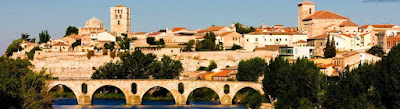
City of Zamora, Spain


Call for Participation
                                                                           Our 2020 annual meeting wants to explore different Jewish branches of the Zamora last name, transliteration included, for example, Zamiro, Zamory, Zamir, Zmiro, Zamero, Zamorano*, in Spain and abroad. 

Genealogy, and the stories around it, allow us to explore itineraries across time and space; our goal is to present live connections among people researching their Jewish ancestry.   

Zamora had an important Jewish population in the Middle Ages, specially between the 11th and the 15th centuries. The first Zamora last name is registered for philosopher, and Kabbalist Abraham ben Solomon of Zamora (13th century), well known to his peers during his time.
  
Before and after 1492, this toponymic last name was used by judeocoversos, including Gabriel of Zamora, trialled by the inquisition in Seville 1481 (First seizure of marranos), and Alfonso of Zamora, founder of the Hebrew Language Studies at University of Salamanca (16th century), and later professor at Alcala de Henares. At the end of his life, he called himself “the last sage of Sefarad” (reference in Spanish).           
We invite you to share this Call for Participation with all persons interested in this topic. Enrollment is open to the public and, like every year, it covers several related events and activities like visit to historic Jewish Quarters, book presentations, Sephardic culinary demonstration, concerts and more.

For updates in the coming months you should visit this page or if you have questions, you can email us at centrocampanton@gmail.com or send a WhatsApp to +34 609 740 116

*Transliterations are changes in the word with the same linguistic root (Zam), for example: Zambrano, Zamatto, Zamero, Zamerro, Zamie, Zamlug, Zamra, Zamor, Zamorani, etc. In Portuguese language, Z usually changes to S. Here reference for Zamora last name at The Museum of the Jewish People (click here)


To know more about our previous events, see the pages with summaries: I, II, III, IV, V, VI, VII

lunes, 23 de diciembre de 2019

Tales of Sefarad

By Karen Sherman, La Crosse, Wisconsin


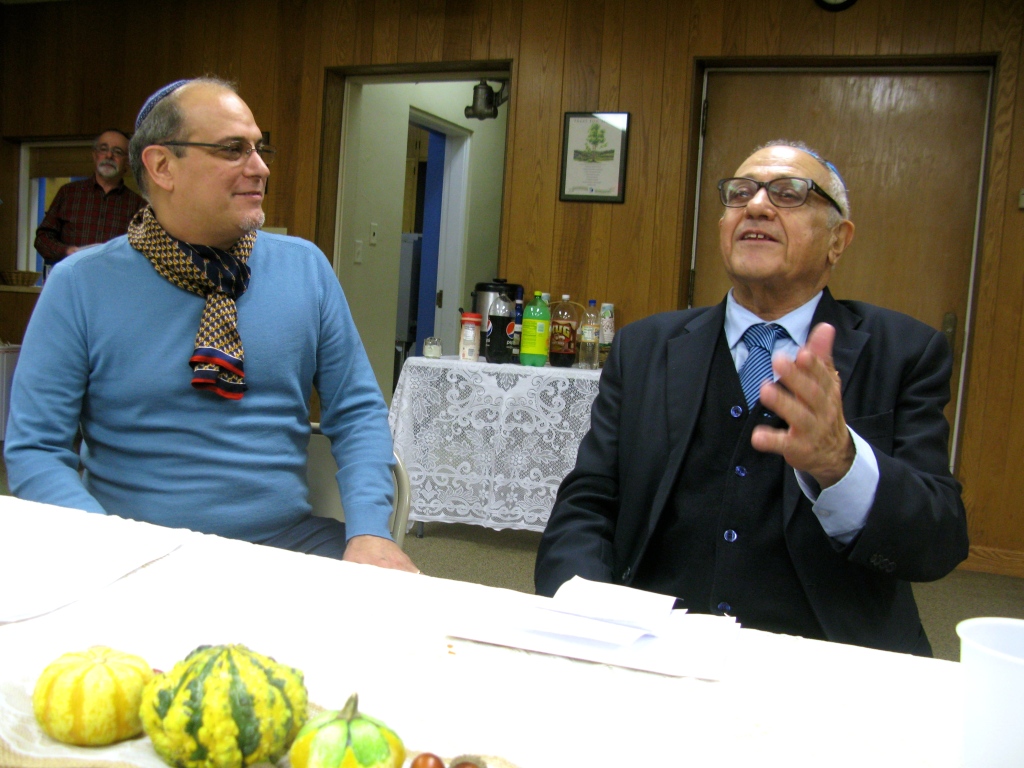
Prof. Jesús Jambrina and Dr. Abraham Haim
Lucky La Crosse for having higher learning institutions to be able to share benefits of international research. Jesús Jambrina, one of my former Viterbo University’s World Languages and Cultures Department colleagues’s research of the Jews of Zamora, Spain led to being awarded the Medal of the Four Synagogues 3 years ago, and Dr. Abraham Haim, President of the Council of Jewish Sephardi Community of Jerusalem returned recently with a Diploma of Recognition for the inclusion of the topic of Sephardic Jews in courses, research and campus activities at Viterbo.

During Dr. Haim’s weeklong visit he gave numerous presentations throughout our area regarding the Sephardi ( Spanish Jews) and their Ladino language. The Thursday of his visit he had a meeting breakfast followed by a road trip to talk on Decorah’s Luther College campus before speaking to our La Crosse Congregation Sons of Abraham that evening, where he received a warm welcome and dinner. 

During that visit Dr. Haim gave a brief talk of Ladino history accompanied with examples of Ladino music. He sang some songs a cappela, and others accompanied on guitar by spiritual leader Brian Serle along with some group singing.

The following morning courtesy of our public library, I attended a more extensive overview of the Sefardi, Spanish and Portuguese Jews who in 1496-7 had to go into exile with their culture of music, foods and Ladino language.

Using the basic "W" question Dr. Haim answered the them regarding the Sephardi, the Jewish Spaniards:


Where did they live? They lived on the Iberian peninsula but not limited to the Andalucia geographical location although it was the center of Jewish life in the Middle Ages close to Granada, the sea, in the capitals, towns and cities, Majorca, the Canary Isles, etc.

When did the Sephardi exist? Differing opinions as to whether it 586 BCE after the destruction of the first temple or the same date the 9th of Av in 70 AD after the destruction of the second Temple.

Who were the Sephardi? After the 15th century these Spanish Jews were numerous proud, cultural and creative ~600,000 of the world’s 1.5 million world Jews integrated Spain. They were culturally moderate without losing their identity. 

During the muslim 7 centuries of rule after invading and conquering Spain (except for Asturias in the north) Muslims, Jews and Christians coexisted. The Jews’s position was affected but treated better than living under the visigoths and even North African Jews also immigrated to the Iberian peninsula like Western European Jews who would eventually move where they could practice their Judaism in Iberia.


Between the 10th and the 12th centuries -the Golden Age- the Sephardi were accepted in society and flourished religiously, culturally, and economically. It wasn’t until the end of the era in the mid 12th century, and new Berber rule that Jewish persecution, and a massacre occurred in Granada, and both Muslims and Jews fled to Toledo which had been reconquered by Christian forces (~1086) 

After the reconquest (of Toledo and other northern christian cities), the Jews translated Arabic texts into the Romance Languages and “also contributed to botany, geography, medicine, mathematics, poetry and philosophy.” Several synagogues were built in Toledo. 

“The anti-Jewish riots of 1391 and the Alhambra Decree of 1492, as a result of which the majority of Jews in Spain (around 300,000) converted to Catholicism and those who continued to practice Judaism (between 40,000 and 80,000) were forced into exile, although many thousands including Moroccan Jews returned in the years following the expulsion.”

Ferdinand and Isabel united with nobility for the 1492 Inquisition forced the Jews to either convert to Catholicism, be killed (buried alive)/ be expelled. 1/3 of the Jewish population left Spain.

Jews had been previously expelled also from France and Germany in the 13rd  and 14th centuries. In 1492 Spain Jews lost their property, careers, but their culture was left in tact. The same thing happened in Portugal 5 years later. 

The Ottoman Empire controlled most of southeastern Europe from the 15th- early 20th Century… The Jews continued to begin new lives elsewhere.

What language did they speak? They spoke dialects of Iberian languages (Castilian, Catalan, Gallego, Leones...) but moved so much that their ladino language which is a mixture of Spanish and Yiddish served as a common thread. Language changes include j-ch, the change of the r and d sounds, u vs o. Those who speak Spanish can understand it due to its Spanish roots.
Some converts returned to Judaism in the 16th and following centuries all across Europe and the Americas. Other Sephardi who survived the inquisition, immigrated to Israel at the end of the 19th Century. Many people of Spanish descent are still discovering their Sephardi roots today.

In 2014, the descendants of Sephardi Jews, who were exiled in 1492, were offered Spanish citizenship, without being required to move to Spain and/or renounce any other citizenship, which they currently may have.” 


Like yiddish, the future of the ladino language is in danger of disappearing. Dr. Haim reminded us the written word will live on forever…


Thank you for returning to La Crosse Dr. Haim and sharing your Sephardic heritage.

lunes, 26 de agosto de 2019

Pictures from 2019 Congress in Jerusalem & Zamora


Cartel del evento, realizado por el Ayto de Zamora, por primera vez desplegados en vallas en el centro y casco histórico

Sesión Jerusalén, 21- 25 de Junio

Para el primer tour nos reunimos en el hotel Agripas de donde salimos a visitar algunos de los barrios sefardíes como Ohel Moshe y otros

La visita estuvo animada por miembros de la comunidad hablante de judeoespañol. Aquí, en el centro, Aharon Palti, quien nos relató historias de su vida en Jerusalén  
Visita a Yad Vashem, Museo del Holocausto, nuestra guía fue la especialista mexicana Hilda Fainsilber
Sesión de apertura en las Cuatro Sinagogas Sefardíes a cargo de Abraham Haim, presidente del Consejo de la Comunidad Sefardí de Jerusalén
 
La prof. Margalit Bejarano, Universidad Hebrea de Jerusalén, presenta la conferencia inaugural

La poeta sefardí Margalit Matitiahu leyó varios de sus poemas dedicados a ciudades españolas donde existieron importantes juderías en la edad media, entre ellas León, Zamora, Cuenca y Madrid.

Abraham García, genealogista en Jerusalén, especializado en árboles de familias conversas, compartió sus experiencias ayudando a descendientes de judíos españoles y portugueses a encontrar sus antepasados judíos como parte de la solicitud de nacionalidad para sefardíes. Curiodisdad: según García, basado en sus búsquedas en los archivos, a su llegada a las Américas entre los siglos XVI y XVIII muchos conversos usaron apellidos vascos para despistar a la inquisición. También, como promedio, sólo en la generación 15 o más se pueden encontrar indicios o de procesados por la inquisición o de antepasados que se fueron de España con el de decreto de 1492
Joshua Mendes, director de S&P Central, habló sobre las comuninades sefardíes occidentales, sobre todo las que se establecieron en Inglaterra y Estados Unidos a partir de los siglos XVII y XVIII 

Eugenio A. Alonso presenta sobre casos inquisitoriales de Judaizantes en La Habana entre los siglos XVI y XVIII a partir del Archivo Historico de Madrid referente a Cartagena de Indias  Dato poco conocido: María Nuñez, una mulata cubana que fue procesada y absuelta en México entre 1649 y 1655, toda su familia fue igualmente acusada. María era una mujer de negocios, lo cual era muy avanzado para esa época. 

En Jerusalén contamos con un reducido, pero altalmente comprometido público integrado por académicos, escritores y miembros de la comunidad de hablantes de judeoespañol.


Panel en el Centro Sefarad - Israel, Madrid, 27 de Junio


Presentación del libro La isla de Abraham (2018) de Jaime Einstein (1947-2015), María de Miguel, Centro Sefarad-Israel da la bienvenida a los asistentes y ponentes Pilar Diez, albacea literaria del autor, y Jesús Jambrina, Viterbo University, quien comentó la novela.


Nuestro grupo de Zamora Sefardí aprovechó la oportunidad para una foto colectiva en el Centro Sefarad-Israel

Concierto "Sefarad en el corazón de Turquía" de Mara Aranda,  Museo Etnográfico de Castilla y León, Zamora


Sesión Zamora, La Alhóndiga
 
El docmental Adio Kerida (2002) de Ruth Behar, Universidad de Michigan - Ann Arbor, se presentó tanto en la sesión de Jerusalén como en Zamora, seguido por un conversatorio con su directora quien estuvo presente en la puesta en España. La película cuenta la historia de los judíos cubanos desde comienzos del siglo XX hasta inicios del siglo XXI, a través de historias autobiográficas de su autora en ciudades como La Habana, Nueva York y Miami. Interview with Ruth in English


Como cada año la mayoría de nuestro público es zamorano y también personas llegadas de otros países y regiones de España y Portugal

Entre las nuevas actividades de este año estuvo el Filandón Sefardí en la Plaza de la Leña en Zamora, que estuvo animado por Alicia Valmaseada, Marifé Andrés y Judith Cohen. El tema fue Los romances de Doña Urraca, que también son cantados en la diáspora sefardí.

El historiador Suso Vila, presentó sobre las conexiones con Perú de una familia conversa de Tuy, Galicia 

Alicia Valmaseda  reflexionó sobre las relaciones linguísticas entre los idiomás leonés y judeoespañol


Panel de judíos hispanoamericanos que se han mudado a España (Sefarad) en los últimos años: Sandras Chakjin (Uruguay), Selbastián Elka (Uruguay) y Luisa Morely Bendahan (Tánger-Venezuela). Moderó Judith Cohen.

Conversatorio de Ruth Behar, Universidad de Michigan - Ann Arbor acerca de sus libros que estuvieron disponibles en la librería Jambrina, en Zamora.

Resume  de cobertura de prensa

Unidos más allá del Atlántico (Leer)
 

Tradición e historia judía en Zamora (Leer)
La presentación de dos libros de Ruth Behar pone broche final al VI Congreso Sefardí (Leer)

Mara Aranda: "La música conecta a los sefardíes con una patria por la que sienten nostalgia" (Leer)

"Aunque queda mucho de la mentalidad inquisitorial en la sociedad actual" (Leer)