martes, 16 de junio de 2015

Celebrating Sephardic Jews Heritage in the Iberian Peninsula, July 2 & 3


Our Center organized two days of events to celebrate Sephardic Jews Heritage in the Iberian Peninsula as part of our international congress in Zamora this July. Here the program:

July 2. Educational tour in the Jewish Quarters of Zamora. Meeting place: Plaza del Maestro, 6 PM.

July 2. Exhibition "Passport to Freedom. Spanish Diplomats during the Holocaust"  curated by the Centro Sefarad-Israel, Colegio Universitario, 8 PM.

July 3. international Congress "Arrival, Lasting and Prominence of the Jews of Zamora", UNED, 9 AM to 8:30 PM. Online registration here


July 3. Shabbat Dinner, Hotel Trefacio, 9:30 PM. Reservations 609 740 116.

domingo, 26 de abril de 2015

International Conference on the Jewish Sephardi Heritage of City of Zamora, Spain


Conference Objectives
  • Communicate the Jewish Sephardi Heritage of the city of Zamora, and Castile and Leon
  • Facilitate academic exchanges among international and local scholars on the topic of the Jews of Zamora, and Castile and Leon
  • Share with the local community research updates on the Jews of Zamora, and Castile and Leon
  • Explore ideas on how to recuperate, protect and value the Jewish Heritage of Zamora, and Castile and Leon
  • Bridge with current Jewish Sephardi communities around the world 
UNED, July 3, 2015
Program 
(for knowing more about our presenters, please, click links on their names) 

8:15 Access Previous Registration (Here) 

9:00. Welcome by Organizers

9:15 – 9:55. “Material Evidences of Jewish Presence in Zamora”, Jesús Jambrina,Viterbo University

10:00-10:50. Early Results from Excavations at Mota de Castrillo (Burgos)”. Manuel Moratinos, María Negredo y Angel Palomino Lázaro, Archeologists, Office of Archeology, and Historical Patrimony Studies

11:00-11:50. “Jewish and Converso Cryptographies in the Northern Border with Portugal”, Emilio Fonseca, Independent Scholar

12:00 – 12:50. “Genetic map of Jewish Sephardi communities in the region of Zamora (Spain) and Tras Os Montes (Portugal)”, Inés Nogueiro, University of Porto


13:00 – 13:50. “From Silence to Awareness. Pride for being B’nei Anusim”. José Manuel Laureiro, Historian, Director of CEIP Antonio Moreno Rosales, Madrid, co-author of The North of Sefarad (2005), and Anun Barriuso, researcher, co-authorof The North of Sefarad (2005), Center Isaac Campantón.

14-15:55. Lunch

16:00-16:50. “Jewish Fighters for the 2nd Republic during the Spanish Civil War” María Antonia Muriel Sastre, anthropologist, Center Isaac Campantón


17:00 – 17:50. “The Sephardic Songs Demystifeied”. Judith Cohen, York University, Canada.

18:00-18:50. “Approaches to Jewish Literature by Authors from Leon”. Santiago Trancón. Writer, author of Memorias de un judío sefardí (2011) and Huellas judías y leonesas en El Quijote (2014).

19:00- 19:50.  “The Four Sephardi Synagogues of the Jewish Quarters of Old Jerusalem, an example of Coexistence, Unity and Peace”. Abraham Haim, President of the SephardiCouncil of the City of Jerusalem.

20:00- 20:50. Brainstorm Session on Having a Jewish Museum in the City of Zamora

Contact Information
UNED 
info@zamora.uned.es 
980 528 399
Centro Isaac Campantón 
centrocampanton@gmail.com 
609 740 116


martes, 21 de abril de 2015

A Jewish Museum for Zamora

Article on the local newspaper La Opinión reports our initiative of creating a Jewish Museum in the city. At the Centro Campantón we work with a definition of Sephardi referring to Jews who were forced to leave Spain and Portugal in 1492, and whose history and culture these communities have kept alive for more than 500 years around the world. This Museum would honor that history through a deeper knowledge of Jews of Zamora and Castile and Leon. Our Conference on July 3 at UNED will host a brainstorm session to explore ideas on how to move forward to create this Jewish Museum. Would you like to join us?   


Un Museo Sefardí en Zamora

Las investigaciones desarrolladas en la ciudad y el apoyo popular a las recientes actividades sobre la cultura hebrea plantean la "necesidad" de un centro monográfico


Un museo para "estudiar y difundir" el legado judío de Zamora y de Castilla y León. Esta es la idea fuerza a la que se han adherido ya decenas de personas en las redes sociales, un proyecto que será presentado por el Centro Campantón en la conferencia del próximo día 3 de julio, acto que sustituye a las jornadas sobre la herencia judía que se han programado los dos últimos años en Zamora.

¿Está justificada la apertura de un nuevo centro de difusión cultural de estas características en Zamora? Los impulsores del proyecto creen que sí, porque se trata de "una necesidad natural" que parte de los conocimientos aportados por los expertos internacionales -fundamentalmente de Israel y Estados Unidos- en los encuentros de la ciudad.


El responsable del Centro Campantón, Jesús Jambrina, se refiere tanto a los estudios difundidos en Zamora por expertos de la talla de Abraham Gross, profesor de la Universidad Ben Gurion de Israel, como a aportaciones de personalidades como Jane S. Gerber, directora del Centro de Estudios Sefardíes de la Universidad de Nueva York.

Durante las jornadas de 2014 y 2015, los ponentes concluyeron que Zamora acogió una de las últimas comunidades judías de prestigio en el país, desde un siglo antes de la fatídica expulsión, en 1492. La ciudad fue cuna, según insisten los participantes, de una escuela de pensamiento liderada por "el último rabino" de Castilla y León, Isaac Campantón.


Pero hay un segundo pilar que justifica el futuro Museo Judío: la respuesta de los ciudadanos de Zamora, que han acudido en un número importante a las sesiones de divulgación cultural. El apoyo popular hizo visible uno de los principales logros ya perceptible: la señalización de la Ruta Sefardí. "Una deuda histórica", a juicio del Ayuntamiento, que se cumplió para seguir el paso de ciudades como Segovia o Toledo, que ya contaban desde antiguo con estos recorridos.

Las conferencias "han puesto en evidencia el caudal judío que tenemos en Zamora, ciudad y provincia, y pensamos que es hora de fijarlo", expone Jesús Jambrina. El profesor cubano, con raíces en Gema, justifica que "contenido tenemos" al tiempo que opina que "su creación tiene el potencial de convertirse en una atracción importante para la ciudad a través de una programación que incluiría las conferencias internacionales, visitas guiadas a la Ruta Sefardí y otras actividades". De hecho, ya ha habido algunas personas que han mostrado su interés en la donación desinteresada de piezas relacionadas con la cultura sefardí.

Uno de los momentos clave para conocer la viabilidad del Museo Judío será el próximo 3 de julio. De hecho, la apertura de la sesión tratará de explorar las posibilidades del centro. El proyecto se convertiría en el epicentro de una actividad permanente después de varias iniciativas de éxito.

viernes, 27 de marzo de 2015

Jewish Zamora travels abroad

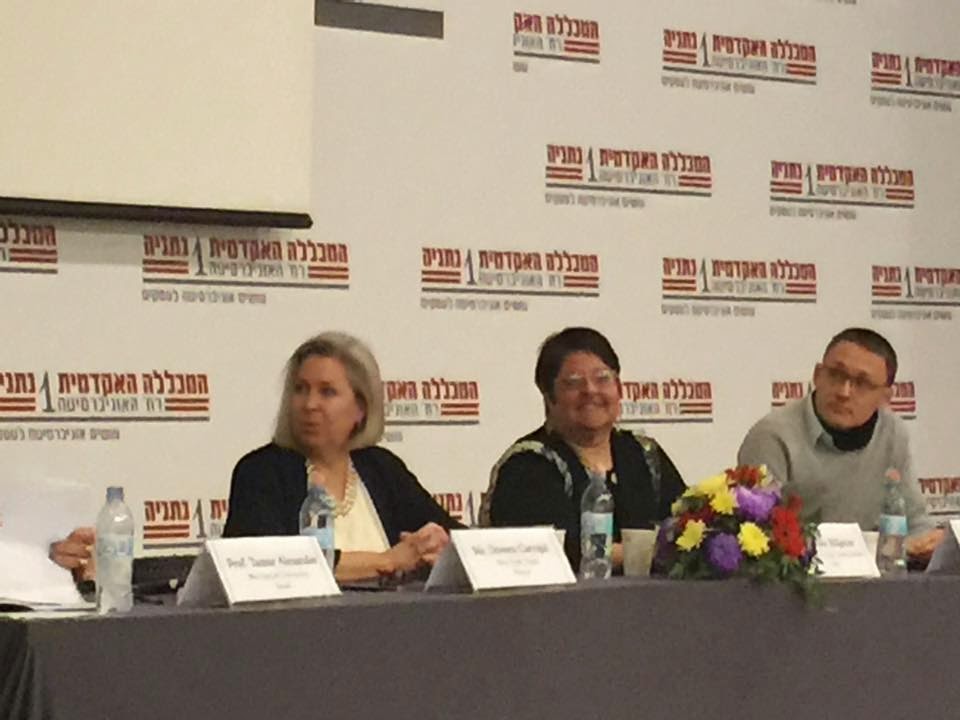
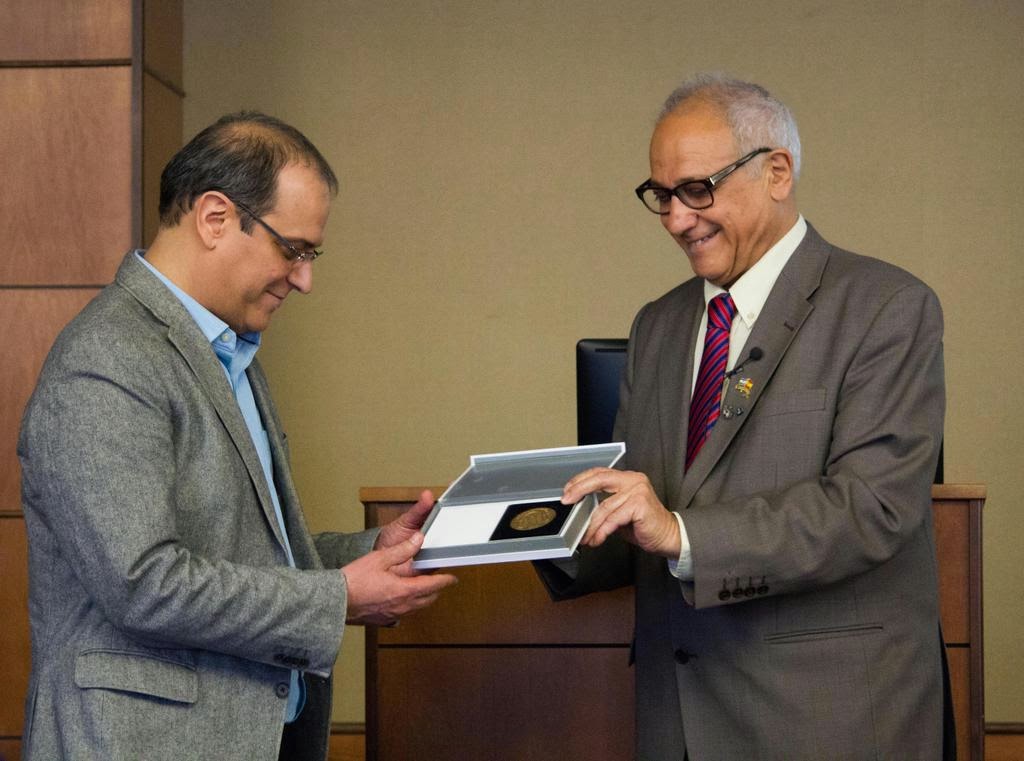
This week (March 23-27) a few experts, friends of our Center, presented their Jewish Zamora related research at the International Conference Mapping the Anussim Diaspora, Netanya Academic College, Israel, and our director was recognized at Viterbo University, in Wisconsin, by the Council of the Sephardi Community of the Old City of Jerusalem for his work on the Jewish Legacy of Zamora. Here some pictures and links sharing information. 

Anun Barriuso (on the left), and José Manuel Laureiro (center), authors of The North of Sepharad (2005) presented at Netanya Academic College on epigraphies in La Raya (Zamora and Salamanca border with Portugal). Both authors have done extensive field work in and around towns like Carçao, and Vimioso, among many others, tracking the marks left by 16th-17th century crypto-jews crossing from one side to another of the border  

Genie Milgrom (center), President of the Crypto-Judaic Studies, author of My 15 Grandmothers (2012), and How I found my 15 Grandmothers (2014), presented at the Netanya Academic College conference on her genealogical work regarding conversos in the area of Fermoselle. She also led a genealogical workshop training interested persons on finding documentation on their potential Jewish ancestry.

Dr. Abraham Haim officially awarded Dr. Jesús Jambrina the Medal of the Four Sephardic Synagogues of the Old City of Jerusalem granted in 2014 by the Council of the Sephardic Community of City of Jerusalem. Ceremony took place at Viterbo University campus, Wisconsin, March 24. Medal recognizes Dr. Jambrina's research on the Jewish legacy of City of Zamora, Spain. 
  
Related information (in Spanish)

"La huella en la piedra: epigrafías cripto judías ibéricas", entrevista con Anun Barriuso y José Manuel Laureiro (Radio Sefarad)


Conversos e inquisición en la España de los siglos XVI y XVII, entrevista con Ignacio Luis Rodríguez, Cátedra España-Israel (Radio Sefarad)

martes, 3 de marzo de 2015

In Zamora: “The uttermost part of the North”


 In the 15th century the Jews lived there (Zamora) in two districts. The population in the aljama was small and numbered only a few hundred. Nevertheless, it was larger than the surrounding communities and is mentioned among the major ones in the tax-collection for the war against Granada.

Lacking in quantity, this vibrant Jewish community more than made up for it in quality. It became famous as one of the foremost centers of Talmud study in fifteenth-century Castile. There the great Rabbi Isaac Qanpanton headed his yeshiva, which was to become the source of a unique analytic method of Talmudic study. That method was spread by his disciples thorough Castile and on to the East after the expulsion. After Qanpanton’s death (1463), Zamora shared its fame with other centers notably Toledo and Guadalajara. Rabbi Samuel Valensi, one of Qanpanton’s foremost disciples, was his master’s successor in Zamora and produced such scholars as Rabbi Moses Al’ashqar and rabbi Jacob Ibn Habib.

We know also that the great philosophical preacher, Rabbi Isaac Arama, lived there before accepting a position elsewhere. Arama’s praise for Zamora is unequivocal. When he tells about his intellectual life there he describes its location and his feelings toward it in phrases such as “Fair in situation, the uttermost parts of the North”, appropriated from the Psalmist, who used these expressions to describe Jerusalem – “the joy of the whole earth…” (Psalms 48,3).

Zamora also produced one of the earliest Hebrew printing-houses (1484). Generally, this was a sign of the cultural centrality of a community, as evident from the fact that the other printing-houses were established in Toledo and Guadalajara, in those years the other major Talmudic centers in Spain. This holds also for Lisbon, which was the major center of Portuguese Jewry, and for printing-houses in Italy and Turkey in the 16th century. It was in such a Torah center that (Abraham) Saba lived. It was also there that he wrote the first part of this commentary Zeror ha-Mor on most or all of the Genesis.

Abraham Gross, Iberian Jewry from Twilight to Dawn. The World of Rabbi Abraham Saba. Leiden, E.J. Brill, 1995, 6-7. 

viernes, 20 de febrero de 2015

R. Isaac Campanton, and the great sages that flourished in Spain, all of them on their own right

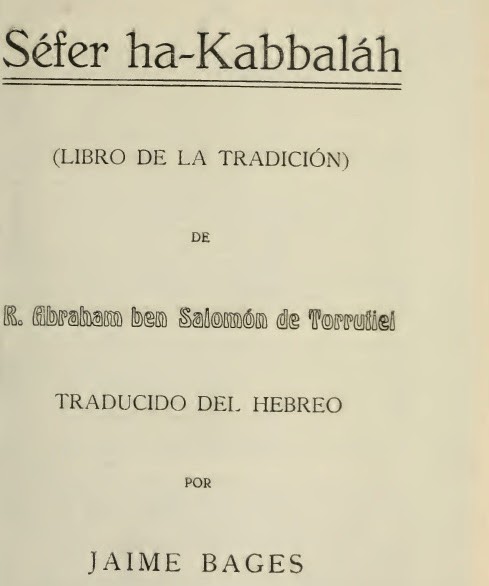
Book of the Tradition (written in the 16th century), Abraham ben Solomon of Torrutiel, translated from Hebrew by Jaime  Bages, Granada, 1920, 270-71. (1)
 
The great sage Isaac (ben Jacob) Campanton (2) studied with his father, taught the Law to Israel and had many disciples, among them my own father and R. Solomon –of blessed memory-, who had a great knowledge of the Talmud, and learned from his teacher for more than twenty years.


Another disciple of Campanton was the great Isaac de Leon (3), who was a scholar on all sciences and taught many disciples on his own, among them, the saint and compassionate R. Shimom Maimi – of blessed memory (4)-, who sanctified Portugal.

Other disciples of Campanton were the great sages Isaac Aboab II (5), R. Moshe the French, R. Shem Tob ben Shem Tob (6), and the great Samuel El Valensi - of blessed memory- (7), who supported his friends, and also had many disciples, among them, the strong hammer, of clever ingenuity, the sage Joseph Uzziel (8), and the sage Moshe Alliegna (Alami?)

Beside the mentioned above, many other sages studied with Campanton during his first years as a teacher, by the end of his life Moshe El Valensi studied with him along with several others not named here.

The great, and compassionate R. Shem Tob Lerma was one of the distinguished disciples of Isaac Aboab II. Lerma died in prision in the capital of Portugal after the expulsion, and many expelled Jews, like the sage Mori, the teacher Jacob Lual and R. Abraham Saba (9) arrived to Fez.

Later these sages went to Arcila by means of an injured boat lent by their enemies with the intention of making these men to die on the sea, but God did a miracle to the sages since they could land in Arcila despite of a badly damaged ship, without a captain, and without a sailor; only God’s clemency guided them.   

The sage Campanton died in Peñafiel, (Hebrew) year 5223 (1463ce), after overcoming several misfortunes, and going like a wanderer, and as a vagabond across the land (refers to Old Castile, and Leon), from here to there because actual terror. I have heard that when Campanton was persecuted by the princes he lied down over the tomb of his notable teacher R. Isaac Gikatilla (10), and when he got up from his teacher’s sepulcher, he said to his disciples: “ Eight days from today, I will die”.   

All these sages mentioned above were disciples of Campanton, they taught the Law in Spain until the time of the expulsion when we all were forced to leave, as I will refer next.  

Notes 
1- Torrutiel's book is a follow up in the 16th century to the another one by Abraham ibn Daud of same title written on 1161. Torrutiel's work covers from 1180 to 1525.  
2-All references to sages will be linked to the Jewish Encyclopedia, 1906 edition, unless is indicated differently. You need to click on the name:  R. Isaac Campanton
3-  R. Isaac de Leon
4- R. Simón Memmi (o Maimi), he was called "the portuguese" went from Portugal to Zamora to study at the Rabbinical School led by Campanton. According to Abraham Gross, Memmi was in Segovia on 1492 (Iberian Jewry, page 27, note 13), and he returned to Portugal along his family through Zamora that same year. Memmi died a few months later due to his suffering in prison. This information comes from Abraham Saba's account of what occured to several sages with whom he traveled to Portugal after the expulsion.   
5-  R. Isaac Aboab II
6-  R. Shem Tob ben Shem Tob
7-  R. Samuel Alvalensi
8-  R. Joseph ben Uzziel
9- R. Abraham Saba
10-R. Isaac Gikatilla
 -----
El maestro Isaac  Campantón y los grandes sabios que florecieron  en España, cada uno maestro en su lugar


El gran maestro Isaac  Campantón estudió con su padre (llamado Jacob), enseñó la Ley a Israel y formó  muchos discípulos, siendo de ellos mi padre y R. Salomón—de bendita memoria—gran conocedor del Talmud, que aprovechó las enseñanzas del maestro durante  más de 20 años, el maestro Isaac de León, que fue un sabio en todas las ciencias y formó también numerosos discípulos, siendo  uno de los mejores el maestro, santo y piadoso que santificó a Dios en Portugal, el maestro R. Simeón Maimí—de bendita  memoria. El maestro Isaac Aboab (II), R.  Moséh el Francés, R. Shem Tob ben Shem  Tob y el gran maestro, favorecedor de sus amigos, Samuel El-Valensí— de bendita memoria —quien a su vez tuvo  muchos discípulos entre los mejores, el martillo fuerte, el de agudeza de ingenio, el maestro Josef Uzziel y el maestro Moseh Alliegna (¿Alami?).

Otros,  además de los mencionados, estudiaron con el maestro Isaac Campantón, en los primeros años de su vida, siendo ya en el final de ella, cuando lo hicieron el maestro santo y piadoso R.  Moséh El-Valensí—de bendita memoria—y algunos grandes sabios aquí no mencionados. El grande y piadoso maestro R. Shem Tob Lerma, que fue uno de los más distinguidos discípulos del maestro Isaac Aboab, se quedó en la cárcel, en la capital de Portugal, después que llegaron a Fez los judíos expulsados, junto con el sabio Morí, el maestro R. Jacob Lual y R. Abraham Saba. 

Al cabo de un tiempo fueron a la ciudad de Arcila, en un barco frágil, siendo la intención de sus enemigos que se sumergiesen en el mar,  mas Dios hizo un milagro con ellos, pues desembarcaron en Arcila,  como hemos dicho, maltrecha la nave, sin patrón ni marinero, solo por la misericordia de Dios que los guiaba. Murió el maestro Isaac  Campantón en Peñafiel, en el año 5223 (1463ec), después de haberle sobrevenido varias desgracias, yendo errante y vagabundo por todas las tierras, de aquí para allá, por causa del terror real. He oído decir, respecto de él, que cuando era perseguido por los príncipes se echó sobre el sepulcro
del grande e insigne maestro R. Isaac Gikatilla, y que, al levantarse de dicho sepulcro, dijo a sus discípulos: «De hoy en 8 días moriré». 

Estos maestros mencionados, discípulos todos ellos del maestro, enseñaron la Ley en España hasta el tiempo de la expulsión, en que hubimos de salir de allí, como  vamos a referir luego. 

viernes, 30 de enero de 2015

Mentions to Campantón and Zamora in Yitzhak Baer's classic book on the Jews of Spain

"Tras la muerte de (Abraham) Benveniste (rab de la Corte), tenemos la noticia, en 1450, de una comisión encargada de repartir los impuestos entre los judíos del reino formada por las siguientes personas: R. Yosef ben SemTob, el famoso filósofo, Yosef Benveniste, hijo de Don Abraham; R. Isaac Campantón, el último Gaon de Castilla; y de otros dos judíos ricos e ilustres"

After (Abraham) Benveniste (Rab of the Court) died, around 1450, a commission to divide taxes among the Jews of the kingdom was created, members of this commission were
R. Yosef ben SemTob, the well known philosopher, Yosef Benveniste, son of Don Abraham, R. Isaac Campantón, the last Gaon of Castilla, and two other rich and distinguished Jews"  

Yitzhak Baer, Historia de los judíos en la España cristiana (Traducción de la edición hebrea (1945, 1959) por José Luis Lacave), Zaragoza, Editorial Ríopiedras, 1981, p. 708.


Notas
Mentions to Zamora in Baer's book on pages 350, 694, 783-4, 828, 840-1, 865-6, 870-1