miércoles, 9 de marzo de 2022

Ten years of International Jewish Sephardic Congresses in Zamora, Spain, July 4-6, 2022

Here is our preliminary Schedule for this year´s congress, which will take place online, time zone Spain.


Monday, July 4


10 – Welcome

10:15 – 11:30, "The imaginary Jew in Spanish Literature”, Marciano Martín Manuel, historian

12 –14, "Letters of the Center AGUDAD AHIM from the Isralite Community of Barcelona, 1926-1937" by María Antonia Muriel Sastre.


Tuesday, July 5  

10 – 11,  “My Sefarad, 40 years of relations with Spain and Iberoamerica”, by Abraham Haim, historian


12 – 14, Book presentation

Tía Fortuna's New Home:A Jewish Cuban Journey
(2022), by Ruth Behar

Wednesday, July 6


10 – 11:30, “Zamoran Rabies: family discoveries” by Genie Milgrom, genealogist.

12-14, Books presentation:

Zamora in the map of Sefarad
. Congress Proceedings, 2013-2020 (Essays, 2022), editors Jesús Jambrina & Alfredo Alonso

Those we missed (Novel, 2022), by Jaime Einstein (1947-2015), editor Pilar Diez

13:15 - 14, Closings followed by Open Annual Board Meeting


domingo, 21 de noviembre de 2021

Jewish, and converso last names from Zamora, Spain

Jewish and converso last names from historical archive documents in Zamora, Spain. Most are from the 11th to the 18th centuries, some are from inquisitorial cases in Portugal, mainly Tras Os Montes, but with residency in Zamora.

Spelling from the original source has been maintained, most are easily transcribable to modern orthography. When the last name is not a direct reference to the city of Zamora, location is included in parenthesis, as well as any other data or information to clarify context on the last name.

After the alphabetical list, there is a copy of Jewish and converso last names after 1492, drawn from a recent academic published article. For questions, comments or suggestions, please, email at centrocampanton@gmail.com 


A - Abadías, Abad de Aula, Abelaben, Abemiver, Abenamar, Abenahypón (Benavente)Abenjamil (Toro), Aben Baça (Baz, Vaz, Abençali), Abenbazar (Fuentesaúco), Abenamías, Aben Farax, Abenrrós, Aben Rubí, Abenzón, Abna, Abohaf (o Aboab), Ámbar, Alashkar, Alba (o Alvo), Albino (Bragança), Abolfazcan (Castroverde de Campos), Alfón, Alonso, Alvarez, Alua, Arama, Aven Sento

B - Bellamín (Villapando), Beny, Berroy (Fermoselle), Bida, Bueno

C - Cabeça (Villalpando), Cañizal, Campantón (también Canpanton, Qanpanton, Kanpanton), Cardero, Carvajal (Bermillo de Sayago y Benavente), Catalán, Castro, Colodre (Toro), Cominete, Comineto (Benavente), Conde, Chamorro, Cedillo, Corcos, Cordero, Çaragoça, Çalama, David (Toro),

D - De la Fuente (Fuentesaúco)

E - Estuñiga

F - Fernández

G - Galochero (Villalpando), Gambuayo, Garçia, Gazapo, Gómez (Toro), Gonçalez,

H - Habib, Ha-Leví (Toro)

J - Jambrina (1994 record from the Jewish Cementery in Madrid), toponym of a town 10 miles Southeast of Zamora.

L - Lopes (Trancoso), Luna

M- Manrique, Marcos (Villalpando), Maldonado, Medina, Méndez (Coimbra), Meir, Milano, Monzón (Alcañices), Musa

N - Naci, Melamed, Nuño de Fito

O- Oeb, Orabuena (Fermoselle), Ortuño (Bragança)

P- Paz, Peres, Pordomingo (Sayago), Portuguesa

R - Rico (Fuentesaúco), Rodríguez, Romi

S - Saba, Salón, San Román, Santa Ana

V - Valçina, Valencia, Valensí, Venialuo, Vida, Villalobos (Villalpando)

T- Tornero, Torralvo,


Z - Zamora (besides the city, also present in Villalpando)

The following last names along with their Christian ones after 1492 were copied from: Martialay,Teresa,  “Conversos y atribución de identidades conversas en tiempos de la expulsión de los judíos de la diócesis de Zamora” en Amrán, Rica & Antonio Cortijo Ocaña, Eds, Minorías en la España medieval y moderna, siglos XVI - XVII, eHumanista, 2017, 33-46

Abraham de Valencia (Fernando de Valencia)
Abraham aben Rubí (Maestre Fadrique)
Jaco de Medina (Fernand Pérez)
Mosé Obadías (Fernando de Miranda)
Rabí Salomón (Tomás)
Ysaque aben Farax (Pedro Osorio)
Yuçe Melamed (Luis Núñez Coronel)
Reyna Corcos (Isabel Osorio)

Abraham aben Baça (Juan de la Peña)


According to Martialay, the following names appear on the documents only as conversos without their Jewish names or last names

Clara (wife of Tomás)
Isabel Fernández (widow of Simuel of Ámbar) and her daughters
Martín Alonso (two persons with the same name)
Fernand Gómez, his wife and children
Manuel Pérez
Isabel Fernández (widow of  Simuel Gambuayo) y her children
Alonso de Zamora
Juan de Zamora
Juan de Valencia
Maese Pedro

lunes, 15 de noviembre de 2021

Why supporting us?


1- We are a group of community Scholars studying Jewish legacy in the region of Zamora, Spain, where Jews lived for more than a millennium. Lines of research include:
· Documented Jewish presence from the 10th to the 15th centuries
· Jews from Zamora in the diaspora
· Crypto Jewish communities from 1492 to the present
· B´nei Anusim memories and stories
· Homage to twenty-two antifascist fighters from Zamora incarcerated in Mauthausen
· Help families building their Jewish genealogies 

2- Centro Campanton has organized nine international congresses (2013-2021) along with annual cultural events & activities related to Jewish life 

3- Collaboration with local organizations, government and academic institutions to recuperate Jewish historic landmarks in the city and in the region

4- Centro Campanton have sponsored books publications, peer reviewed papers, and presentations at conference and events. 

5- Current projects we are trying to advance:
· A Jewish Museum in Zamora, to also house the Center
· Publication of congresses proceedings

6- This website documents our major programs, activities, and if you need more information you can reach us via email at centrocampanton@gmail.com
We also have two more webpages in Spanish: www.zamorasefardi.com & www.zamorasefardi.es

domingo, 8 de agosto de 2021

Was One of Catholic Spain’s Prominent Religious Scholars Secretly Jewish? New research suggests that Alfonso de Zamora may have remained true to his faith

 Dr. Ahuva Ho for The Librarian, National Library of Israel 08.02.2021


"Alfonso was certain that whoever read his compositions would never be able to reveal his secrets..." (Source images: The Polyglot Bible, 1514, National Library of Israel & Alfonso de Zamora's translation of Mikhlol, 1527, National Library of France)
 

"One of the Spanish “New Christians” most cherished by the Catholic authorities was Alfonso de Zamora (1474–1545/6). A graduate of the famous Campanton Yeshiva in Zamora, he first escaped to Portugal in 1492, but for unknown reasons returned to Spain around 1497 as a converso.

In a few years we find him in Salamanca as a teacher and a scribe until 1512 when he was transferred to the University of Alcala de Henares. His involvement in the editing of the first Polyglot Bible, his books, scribal and teaching positions raised his esteem and importance at the dawn of the Renaissance".

Continue reading HERE


domingo, 9 de mayo de 2021

Call for Papers, 9th International Congress on the Jewish Legacy of Zamora, Spain

Isaac Campanton (1360-1463), his works, his time, and his disciples

 Campanton was considered the Gaon of the 9th era of the Sephardic Rabbanin, which is counted since the Academia from Pumdebita moved to Cordoba around 948 c.e. This zamoran sage was the most important figure among the Iberian ones from the late 14th century to the mid 15th one. He learned with his father, Jacob, and wrote, as far as we know today, only book – The methodology of Talmud. He is also known because of his disciples, among them Isaac Aboab II, Isaac de León, Yosef Hayyún, Simón Memi, Jacob Habid, Shem Tob ben Shem Tob, Samuel Valensi, and Abraham Saba; some of them were the head of several Jewish communities in Spain at the moment of the expulsion.

Depiction of a Jewish sage, 14th century in Spain,
National Library Collection


The teachings of Campanton fled Iberia with his disciples, and with them it became one of the center pieces of the pedagogical and ethical practices in the Sephardic diaspora, from Oporto to Safed and from Fez to Amsterdam. Sages like Levi Habid, Jacob Berah and Samuel Medina applied Campanton’s methodology to their own schools in Jerusalem, Safed and Salonica, among other places. Still, in 1748, Campanton is mentioned as one of the most important Spanish Torah teaching references in the commentary to Proverbs by the Gavison family from Seville.   


Proposals are encouraged, but not limited to, on the following topics:

  • Role of The Methodology of the Talmud in Jewish education post 1492 period
  • Legacy of Campanton’s disciples
  • Who were the Campanton? Where did they come from? Where did they go after 1492, if they left? If they stayed, which last name they adopted?
  • Rebirth of the Jewish community in Spain in the mid 15th century, myth or reality?
  • Identity debates: are Jews the conservos judaizers prosecuted by the inquisition?
  • Jewish migrations from Spain previous to 1492


Proposals submissions to centrocampanton@gmail.com until June 21. Due to the current public health situation, congress will take place in an online format. Proposal will be read as they arrived, and they can receive comments for their improvement if needed in order to be accepted.  


sábado, 22 de febrero de 2020

Zamographies, July 2-3, 2020 (postponed)

DUE TO THE CURRENT GLOBAL PANDEMIC WE HAVE DECIDED TO CANCEL OUR FACE TO FACE ANNUAL CONGRESS, AND ORGANIZE ONE ONLINE SECTION ON THE SAME DATE OF JULY 1 & 2, 8:30 PM, Madrid Time. COME BACK TO THIS PAGE FOR MORE INFO.
THIS EVENT TOOK PLACE ONLINE HAS PLANNED, VISIT OUR SOCIAL NETWORKS FOR PICTURES AND VIDEOS.


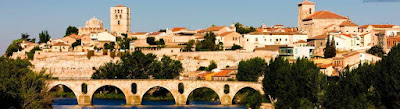
City of Zamora, Spain


Call for Participation
                                                                           Our 2020 annual meeting wants to explore different Jewish branches of the Zamora last name, transliteration included, for example, Zamiro, Zamory, Zamir, Zmiro, Zamero, Zamorano*, in Spain and abroad. 

Genealogy, and the stories around it, allow us to explore itineraries across time and space; our goal is to present live connections among people researching their Jewish ancestry.   

Zamora had an important Jewish population in the Middle Ages, specially between the 11th and the 15th centuries. The first Zamora last name is registered for philosopher, and Kabbalist Abraham ben Solomon of Zamora (13th century), well known to his peers during his time.
  
Before and after 1492, this toponymic last name was used by judeocoversos, including Gabriel of Zamora, trialled by the inquisition in Seville 1481 (First seizure of marranos), and Alfonso of Zamora, founder of the Hebrew Language Studies at University of Salamanca (16th century), and later professor at Alcala de Henares. At the end of his life, he called himself “the last sage of Sefarad” (reference in Spanish).           
We invite you to share this Call for Participation with all persons interested in this topic. Enrollment is open to the public and, like every year, it covers several related events and activities like visit to historic Jewish Quarters, book presentations, Sephardic culinary demonstration, concerts and more.

For updates in the coming months you should visit this page or if you have questions, you can email us at centrocampanton@gmail.com or send a WhatsApp to +34 609 740 116

*Transliterations are changes in the word with the same linguistic root (Zam), for example: Zambrano, Zamatto, Zamero, Zamerro, Zamie, Zamlug, Zamra, Zamor, Zamorani, etc. In Portuguese language, Z usually changes to S. Here reference for Zamora last name at The Museum of the Jewish People (click here)


To know more about our previous events, see the pages with summaries: I, II, III, IV, V, VI, VII

lunes, 23 de diciembre de 2019

Tales of Sefarad

By Karen Sherman, La Crosse, Wisconsin


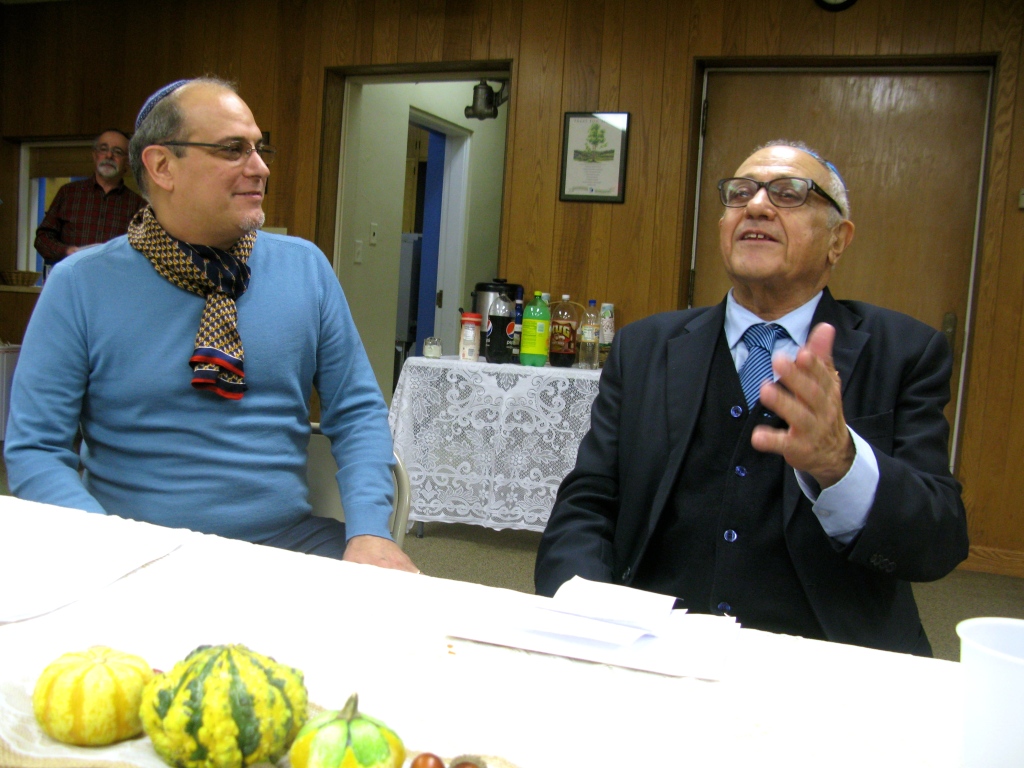
Prof. Jesús Jambrina and Dr. Abraham Haim
Lucky La Crosse for having higher learning institutions to be able to share benefits of international research. Jesús Jambrina, one of my former Viterbo University’s World Languages and Cultures Department colleagues’s research of the Jews of Zamora, Spain led to being awarded the Medal of the Four Synagogues 3 years ago, and Dr. Abraham Haim, President of the Council of Jewish Sephardi Community of Jerusalem returned recently with a Diploma of Recognition for the inclusion of the topic of Sephardic Jews in courses, research and campus activities at Viterbo.

During Dr. Haim’s weeklong visit he gave numerous presentations throughout our area regarding the Sephardi ( Spanish Jews) and their Ladino language. The Thursday of his visit he had a meeting breakfast followed by a road trip to talk on Decorah’s Luther College campus before speaking to our La Crosse Congregation Sons of Abraham that evening, where he received a warm welcome and dinner. 

During that visit Dr. Haim gave a brief talk of Ladino history accompanied with examples of Ladino music. He sang some songs a cappela, and others accompanied on guitar by spiritual leader Brian Serle along with some group singing.

The following morning courtesy of our public library, I attended a more extensive overview of the Sefardi, Spanish and Portuguese Jews who in 1496-7 had to go into exile with their culture of music, foods and Ladino language.

Using the basic "W" question Dr. Haim answered the them regarding the Sephardi, the Jewish Spaniards:


Where did they live? They lived on the Iberian peninsula but not limited to the Andalucia geographical location although it was the center of Jewish life in the Middle Ages close to Granada, the sea, in the capitals, towns and cities, Majorca, the Canary Isles, etc.

When did the Sephardi exist? Differing opinions as to whether it 586 BCE after the destruction of the first temple or the same date the 9th of Av in 70 AD after the destruction of the second Temple.

Who were the Sephardi? After the 15th century these Spanish Jews were numerous proud, cultural and creative ~600,000 of the world’s 1.5 million world Jews integrated Spain. They were culturally moderate without losing their identity. 

During the muslim 7 centuries of rule after invading and conquering Spain (except for Asturias in the north) Muslims, Jews and Christians coexisted. The Jews’s position was affected but treated better than living under the visigoths and even North African Jews also immigrated to the Iberian peninsula like Western European Jews who would eventually move where they could practice their Judaism in Iberia.


Between the 10th and the 12th centuries -the Golden Age- the Sephardi were accepted in society and flourished religiously, culturally, and economically. It wasn’t until the end of the era in the mid 12th century, and new Berber rule that Jewish persecution, and a massacre occurred in Granada, and both Muslims and Jews fled to Toledo which had been reconquered by Christian forces (~1086) 

After the reconquest (of Toledo and other northern christian cities), the Jews translated Arabic texts into the Romance Languages and “also contributed to botany, geography, medicine, mathematics, poetry and philosophy.” Several synagogues were built in Toledo. 

“The anti-Jewish riots of 1391 and the Alhambra Decree of 1492, as a result of which the majority of Jews in Spain (around 300,000) converted to Catholicism and those who continued to practice Judaism (between 40,000 and 80,000) were forced into exile, although many thousands including Moroccan Jews returned in the years following the expulsion.”

Ferdinand and Isabel united with nobility for the 1492 Inquisition forced the Jews to either convert to Catholicism, be killed (buried alive)/ be expelled. 1/3 of the Jewish population left Spain.

Jews had been previously expelled also from France and Germany in the 13rd  and 14th centuries. In 1492 Spain Jews lost their property, careers, but their culture was left in tact. The same thing happened in Portugal 5 years later. 

The Ottoman Empire controlled most of southeastern Europe from the 15th- early 20th Century… The Jews continued to begin new lives elsewhere.

What language did they speak? They spoke dialects of Iberian languages (Castilian, Catalan, Gallego, Leones...) but moved so much that their ladino language which is a mixture of Spanish and Yiddish served as a common thread. Language changes include j-ch, the change of the r and d sounds, u vs o. Those who speak Spanish can understand it due to its Spanish roots.
Some converts returned to Judaism in the 16th and following centuries all across Europe and the Americas. Other Sephardi who survived the inquisition, immigrated to Israel at the end of the 19th Century. Many people of Spanish descent are still discovering their Sephardi roots today.

In 2014, the descendants of Sephardi Jews, who were exiled in 1492, were offered Spanish citizenship, without being required to move to Spain and/or renounce any other citizenship, which they currently may have.” 


Like yiddish, the future of the ladino language is in danger of disappearing. Dr. Haim reminded us the written word will live on forever…


Thank you for returning to La Crosse Dr. Haim and sharing your Sephardic heritage.